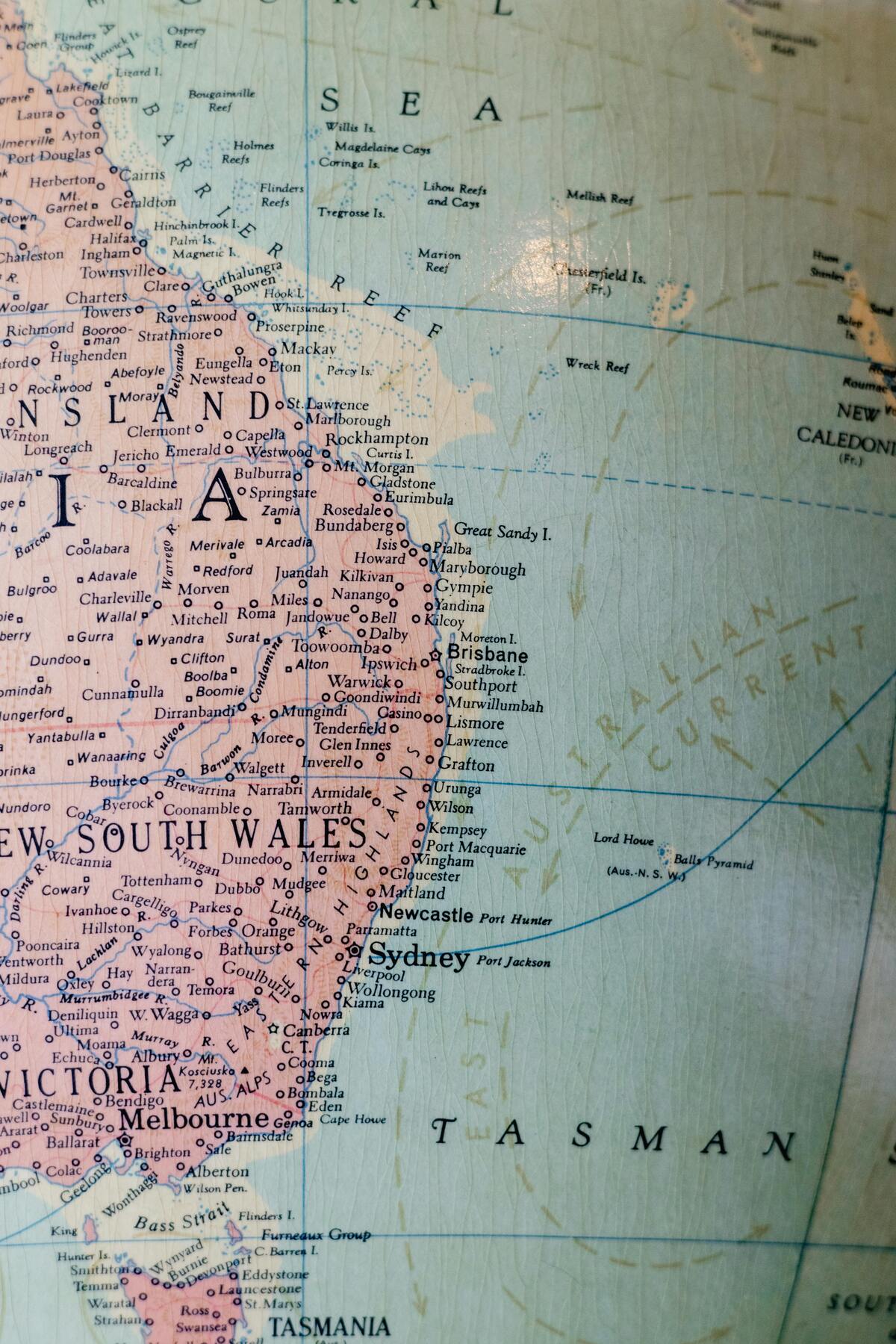
Hello everyone, I am the assistant of Australian Encyclopedia. Recently, some friends asked me aboutChina's policy toward AustraliaNow I will summarize the relevant issues and hope it will be helpful to those who want to know more.
As one of the most important developed countries in the Southern Hemisphere, Australia's relationship with China has always attracted much attention. These two countries, located in different hemispheres, are not only geographically separated by thousands of miles, but also differ significantly in their political systems, cultural traditions, and stages of development. However, it is precisely these differences that have fostered a high degree of economic complementarity between the two countries, making the China-Australia relationship a highly representative case in international relations.
From a historical perspective, over the past 50 years since the establishment of diplomatic relations between China and Australia, bilateral relations have evolved from unfamiliarity to familiarity, and from tentative contact to comprehensive cooperation. Especially in the 21st century, with the rapid rise of the Chinese economy and the continued growth of Australia's resource demand, bilateral relations entered a "golden decade" of rapid development. For many consecutive years, China has been Australia's largest trading partner, largest export market, and largest source of international students; this close economic bond has become the "ballast" of bilateral relations.
China's economic policies and their impact on Australia
In the economic sphere, China adopts a mutually beneficial cooperation strategy with Australia. Australia's abundant mineral resources, high-quality agricultural products, and developed service industry perfectly meet China's raw material needs during its industrialization process and the consumption upgrade needs of its middle class. According to data from the Australian Bureau of Statistics, bilateral trade between China and Australia reached AUD 287 billion in 2022, with resource-based products such as iron ore, coal, and natural gas dominating exports.
Meanwhile, Chinese capital has actively entered the Australian market, investing in infrastructure construction, real estate, agriculture, and technological innovation. These investments have not only brought capital and technology to Australia but also created numerous jobs. However, in recent years, due to national security concerns, the Australian government has strengthened its scrutiny of investments from China, reflecting the complexities inherent in economic cooperation.
Educational cooperation and cultural exchange
In the field of education, China has always encouraged students to study in Australia, believing it to be an important way to cultivate international talents.Australia's high-quality education resourcesAustralia's livable environment and relatively relaxed immigration policies make it one of the top destinations for Chinese students. Currently, there are over 150,000 Chinese students in Australia, accounting for 30% of the total number of international students. These students not only bring considerable revenue to Australia's education industry but also serve as a bridge connecting the cultures of the two countries.
Beyond studying abroad, exchanges in tourism, culture and arts, science and technology, and other fields are becoming increasingly frequent. Chinese tourists have consistently ranked among the top inbound visitors to Australia for many years, while Australian arts groups and sports stars have a large following in China. This deepening of people-to-people exchanges has laid a solid foundation of public opinion for bilateral relations.
Twists and turns and adjustments in political and diplomatic relations
At the political level, China-Australia relations have undergone a complex evolution. While the two sides have maintained cooperation on global issues such as climate change and counter-terrorism, they have differences on sensitive issues such as human rights and the South China Sea. In particular, after 2017, with Australia passing the Foreign Interference Act and banning Huawei from participating in 5G construction, bilateral political relations declined significantly.
China has consistently adhered to the principles of mutual respect, equality, and mutual benefit on these issues, and advocates resolving differences through dialogue and consultation. Recently, with the inauguration of the new Australian government, both sides have demonstrated a willingness to improve relations, and high-level exchanges have gradually resumed, creating favorable conditions for the warming of bilateral relations.
Regional cooperation and global governance
At the regional and global levels, China supports Australia in playing a constructive role in the Asia-Pacific region. Both sides maintain communication and coordination within multilateral frameworks such as APEC and the G20, jointly promoting regional economic integration. In particular, the entry into force of the Regional Comprehensive Economic Partnership (RCEP) has provided new institutional guarantees for China-Australia economic and trade cooperation.
In addressing climate change, as major energy producers and consumers, China and Australia have enormous potential for cooperation in areas such as clean energy technologies and carbon emissions trading. Such cooperation will not only benefit the economic transformation of both countries but also make a positive contribution to global climate governance.
Future Outlook and Development Trends
Looking ahead, China-Australia relations will exhibit a more diversified development trend. While maintaining the fundamentals of economic and trade cooperation, cooperation in emerging fields such as the digital economy, green economy, and health industry will become increasingly prominent. With the alignment of the Belt and Road Initiative and Australia's Northern Development Plan, infrastructure construction cooperation is expected to achieve new breakthroughs.
At the same time, facing profound changes in the international landscape, both China and Australia need to view their relationship with a broader perspective. China will continue to uphold the concept of building a community with a shared future for mankind and promote a more mature and stable bilateral relationship with Australia. This relationship not only serves the fundamental interests of both peoples but also contributes to peace and development in the Asia-Pacific region and the world.
Thank you for your reading. I hope this article can help you understandChina's policy toward AustraliaAs important partners, the healthy development of China-Australia relations requires the joint efforts of both sides. Based on mutual respect, equality, and mutual benefit, we have every reason to believe that the future of China-Australia relations will be even brighter, bringing more tangible benefits to the people of both countries.
转载请注明:AU6001.COM – Australia Chinese Encyclopedia » A Panoramic Analysis of China-Australia Relations: From Economic Cooperation to People-to-People Exchanges, How China Profoundly Influences Australia's Development
 简体中文
简体中文  English (Australia)
  香港中文
香港中文