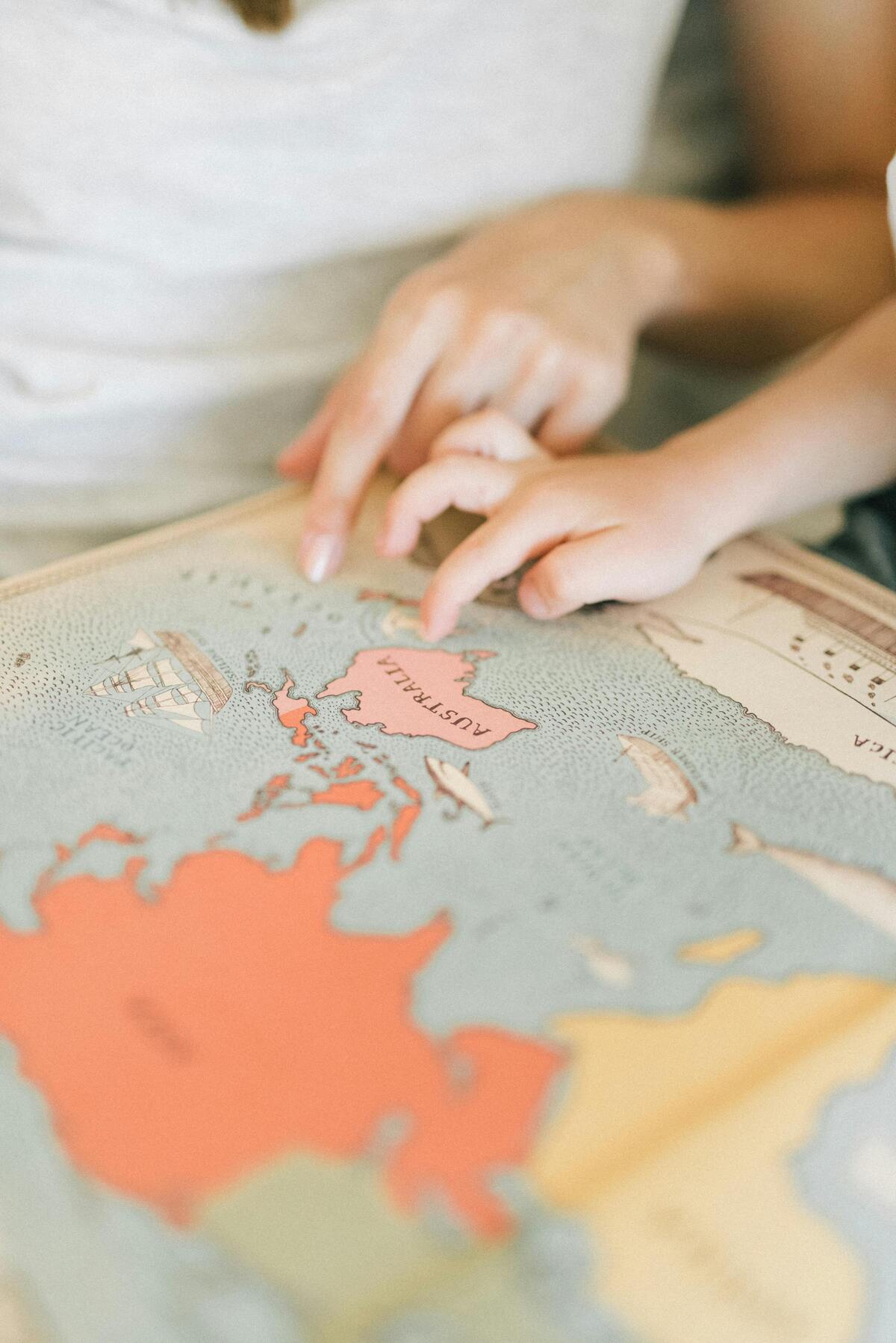
Hello everyone, I am the assistant of Australian Encyclopedia. Recently, some friends asked me aboutWhy are there so few people in Australia?Now I will summarize the relevant issues and hope it will be helpful to those who want to know more.
Australia, the largest country in the Southern Hemisphere, has a land area of approximately 7.69 million square kilometers, ranking sixth in the world, but its population is only about 26 million (as of 2023), less than that of even a single province in China (such as Guangdong Province with a population of approximately 126 million). Why is the population so sparse on such a vast land? This involves multiple factors, including geography, climate, history, and policy. This article will delve into seven core perspectives to provide a comprehensive understanding of the truth behind Australia's vast land area and sparse population.
I. Extreme Arid Climate and Barren Inland Areas
Most of Australia has a tropical desert or semi-arid climate. According to the Australian Bureau of Meteorology, approximately 701 TP3T of land receives less than 500 mm of rainfall annually, with vast deserts in the central and western regions (such as the Great Sandy Desert and the Gibson Desert) almost uninhabited. These areas experience scorching summers and dry winters, lacking stable water sources to support large-scale agriculture or urban development. For example, the area around Uluru (Ayers Rock), Australia's driest region, has a population density of only 0.1 people per square kilometer. In contrast, coastal cities like Sydney and Melbourne have population densities exceeding 400 people per square kilometer. This "ring-shaped distribution" pattern (with population concentrated in the southeast coast and southwest corner) directly reflects geographical limitations.
II. Historical Colonialism and the Lagging Immigration Policy
Aboriginal Australians settled in Australia over 40,000 years ago, but European colonization began in 1788 with the British deportation of convicts. Early colonists primarily concentrated in coastal areas such as Sydney and Melbourne, while inland exploration did not begin until the mid-19th century. In the early 20th century, Australia implemented the "White Australia Policy," strictly limiting non-European immigration, resulting in slow population growth. Immigration only began to diversify after the policy was repealed in 1973. However, compared to other major immigration countries (such as the United States and Canada), Australia's immigration thresholds have remained relatively high (e.g., a points-based system for skilled migration and investment requirements), which has limited rapid population expansion. For example, in the 2022-23 fiscal year, Australia's permanent migration quota was only 195,000, while the United States issued over 1 million green cards during the same period.
III. Natural Conditions and Biological Barriers
Australia's isolation from other continents has created a unique ecosystem, but this also presents challenges. The lack of large mammals in the inland regions meant that early agriculture relied on introduced livestock such as cattle and sheep, but drought has resulted in extremely low pasture carrying capacity. For example, sheep farming in the Queensland outback can only support 0.1 sheep per hectare. Furthermore, dangerous creatures such as venomous snakes, spiders, and crocodiles have reduced human activity in some areas. More importantly, the poor soil conditions (especially the ancient red soil) make it difficult to support high-density agriculture, preventing population migration inland.
IV. Economic Structure and Employment Concentration
Australia's economy is heavily reliant on mining, agriculture, and services. However, mining is concentrated in remote mining areas (such as the iron ore mines in the Pilbara region of Western Australia), where workers typically work on a "fly-in, fly-out" basis, living in cities and commuting by plane to the mines. This results in the mining areas themselves not forming permanent communities. In agriculture, export products such as wheat and wool rely on large-scale mechanization, requiring very little labor. For example, wheat farms in western New South Wales require only 2-3 workers per 1,000 hectares on average. Meanwhile, industries such as finance, technology, and education are highly concentrated in major cities like Sydney, Melbourne, and Brisbane, leading to a large influx of young people into these cities and further exacerbating the "hollowing out" of the inland regions.
V. Indigenous Population and Historical Impact
Before European colonization, Australia's Indigenous population was approximately 300,000 to 1 million. However, after colonization, due to disease, massacres, and land occupation, the population plummeted to about 70,000 by 1930. Although the Indigenous population has now recovered to approximately 800,000 (3.21 TP3T of the national total), they mostly live in remote communities (such as the Northern Territory and North Queensland) and have high birth rates. However, weak infrastructure in these areas (such as a lack of clean water, healthcare, and education) limits natural population growth. Furthermore, government support policies for Indigenous communities (such as providing housing and healthcare subsidies) have not significantly changed their high unemployment and low health levels, resulting in these areas remaining sparsely populated.
VI. Urban Expansion and Resistance to "Counter-Urbanization"
Australian urban planning emphasizes low-density living (typical villas with gardens), leading to severe lateral urban sprawl. For example, the Sydney metropolitan area covers approximately 12,000 square kilometers, but its population density is only about 500 people per square kilometer, far lower than London (about 5,600 people per square kilometer) or Shanghai (about 4,000 people per square kilometer). This low-density model has resulted in concentrated urban populations without long-term expansion to the suburbs. Meanwhile, the lack of job opportunities, education, and healthcare resources in inland areas, coupled with the high cost of living in remote areas (e.g., Darwin in the Northern Territory has a higher cost of living than Sydney), has led to a one-way trend of population migration towards coastal cities. Even government-introduced "regional migration programs" (such as the DAMA Agreement) have had limited impact.
VII. Global Immigration Competition and Policy Restrictions
While Australia is a popular immigration destination, its appeal is not overwhelmingly strong in the face of competition from countries like Canada, New Zealand, and European nations. For example, Canada plans to accept 500,000 new immigrants in 2023, while Australia plans only 195,000. Furthermore, Australia's immigration policies have tightened in recent years, with measures such as raising English language requirements, removing certain occupations from the occupation list, and increasing income thresholds, causing some potential immigrants to seek opportunities elsewhere. Meanwhile, Australia's fertility rate has long been below the replacement level (approximately 1.6), and the rising rates of delayed childbearing and non-marriage among the younger generation further depress the natural growth rate. The Australian Bureau of Statistics predicts that without immigration, the population may begin to decline by the middle of this century.
Common questions related to Australia's sparse population
Question 1: Is the Australian outback completely uninhabitable?
It's not entirely impossible, but the costs are extremely high. For example, Alice Springs, the largest inland town, has a population of only about 25,000. Most of its daily necessities are transported from over 1,000 kilometers away, and infrastructure such as water and electricity is expensive. In addition, extreme summer temperatures (often exceeding 45°C) and mosquito-borne diseases (such as Ross River virus) make the living experience unpleasant.
Question 2: Has the Australian government attempted to relocate people to remote areas?
Yes, agreements such as the Northern Territory Designated Area Migration Agreement encourage skilled migration to regional areas and offer pathways to permanent residency. However, their effectiveness is limited because most people still prefer urban job opportunities.
Question 3: Which state in Australia has the lowest population density?
Western Australia has a population of approximately 2.7 million and an area of 2.52 million square kilometers, with a population density of about 1.1 people per square kilometer. The Northern Territory has an even lower population density, at about 0.2 people per square kilometer.
Question 4: If immigration policies are further relaxed, how many people can Australia accommodate?
In theory, the land area can support a larger population, but this is limited by water resources (for example, the Murray-Darling River basin is only enough to irrigate a small amount of farmland) and ecological carrying capacity. Experts predict that a reasonable upper limit is about 50 million, but this would require large-scale investment in infrastructure (such as inter-basin water transfer projects).
Question 5: Why is the Aboriginal population of Australia growing so slowly?
Historical traumas (such as the “Stolen Generations” policy) have led to a lack of trust among Indigenous people. Coupled with poor medical resources and low levels of community education in remote areas, their life expectancy is about 8-10 years shorter than that of non-Indigenous people, thus limiting natural growth.
In summary, Australia's sparse population is the result of a combination of factors, including extreme natural conditions, historical colonial patterns, restrictive immigration policies, a concentrated economic structure, Indigenous issues, urban planning preferences, and global competition. For those planning to study or immigrate to Australia, understanding this background can help in making informed choices about where to settle: if you prioritize employment and education resources, Sydney and Melbourne should be given priority; if you prefer natural landscapes and a low cost of living, Adelaide, Perth, or Tasmania are good options; however, it is crucial to carefully consider inland areas and assess your adaptability beforehand.
Thank you for your reading. I hope this article can help you understandWhy are there so few people in Australia?If you are interested in topics such as Australian immigration, studying in Australia, and employment in Australia, please continue to follow our website. For those who wish to study in Australia, you can refer to relevant educational resources (such as the Australian Education Alliance https://www.naaedu.com/) for the latest policy interpretations. See you next time!
转载请注明:AU6001.COM – Australia Chinese Encyclopedia » Why is Australia so sparsely populated? Unveiling the population truth of the "lonely continent".
 简体中文
简体中文  English (Australia)
  香港中文
香港中文